
Why U.S. Latino Auto Buyers Are the Most Underserved Audience in Automotive Marketing
The U.S. Latino automotive buyer represents 20% of the population, 17% of new vehicle registrations, and over $3 trillion in spending power, yet receives less than 1% of digital ad investment. Here is what the data says, and what it means for brands that want to grow.
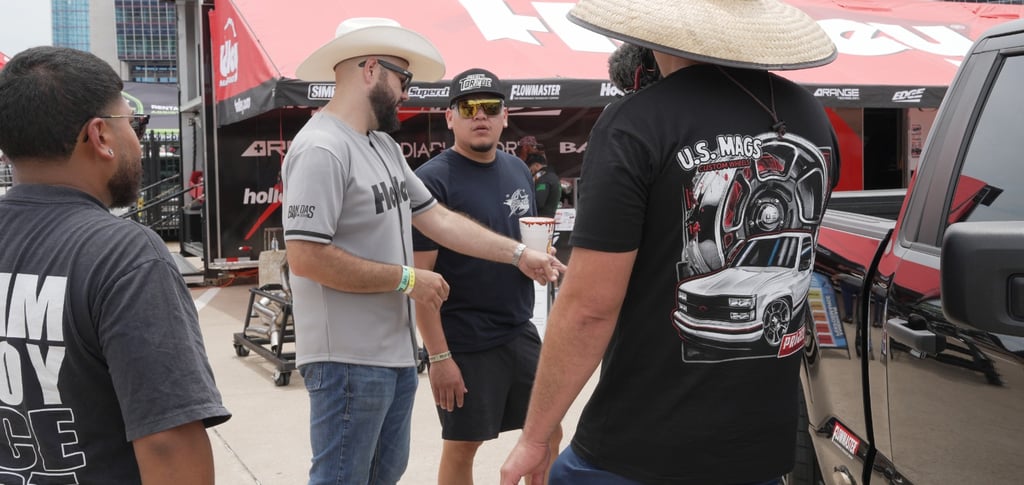
There is a buyer in your market who represents nearly 20% of the U.S. population, drives 17% of new vehicle registrations, has a median age of 31, considers 6 to 7 brands before purchasing, and uses mobile and social media at rates that exceed the general market by a significant margin.
Brands are not reaching him effectively. Most are not reaching him at all.
Here is what the data says — and what it means for any automotive brand with ambitions in the American market.
The Market Is Not a Niche. It Is the Growth.
Between 2000 and 2024, Latino consumers accounted for 56% of total U.S. population growth, according to Pew Research Center. In 2024, the U.S. Latino population reached 68 million people, nearly double the 35 million recorded in 2000, and now represents 20% of the country.
The age profile matters as much as the size. The median age of the U.S. Latino population is 31.2 years, compared to 43.2 years for non-Hispanic whites. This is not a legacy audience in the late stages of a purchase cycle. It is a buyer who is entering peak earning years, forming households, and making the vehicle, parts, and maintenance decisions that will define brand loyalty for the next two decades.
For context: 32% of babies born in the United States today have at least one Hispanic parent. The brands that build trust with this audience now are not just capturing today's buyer. They are establishing the category defaults for the next generation.
Texas and California Are Not Regional Markets. They Are the Opportunity.
California has 15.7 million Hispanic residents. Texas has 12.1 million and is growing faster than any other state, adding over 242,000 Hispanic residents between 2022 and 2023 alone. Hispanic consumers represent 40.8% of California's population and 40.3% of Texas's.
The Houston metro area recorded the largest Hispanic population gain of any metro in the country in 2023. The San Antonio metro is majority Hispanic at 54.8%. Los Angeles, Fresno, and Riverside follow similar patterns.
These are not secondary markets. They are the core of American truck culture, aftermarket spending, and performance parts consumption. Any brand with distribution in Texas or California that is not actively communicating with this audience is funding acquisition campaigns that systematically miss the fastest-growing buyer segment in both states.
The Buyer Is Financially Significant and Actively in Market
UCLA's U.S. Latino GDP Report places Latino consumer spending at $3 trillion in 2024, with total economic output at $4.4 trillion. Nielsen puts Hispanic purchasing power at over $4.1 trillion. The directional consensus across sources is clear: this is one of the most economically powerful consumer segments in the country.
In automotive specifically, Hispanic buyers account for approximately 17% of new vehicle registrations nationally, with an average purchase price of $33,677, according to data compiled by Demand Local citing S&P Global Mobility. They consider 6 to 7 brands during the purchase journey, roughly two more than the general consumer. They buy vehicles at higher frequency and are more often simultaneously in market for more than one vehicle.
Toyota has built a sustained competitive advantage in this segment by investing consistently over time. Twenty-five percent of Toyota's U.S. sales come from Hispanic buyers, according to Demand Local. That is not coincidence. It is the compounded result of treating this audience as a primary market instead of an afterthought.
He Is on YouTube. He Is Not Seeing Your Brand.
Nielsen reported in 2025 that YouTube accounts for nearly 21% of total TV viewing time among Hispanic audiences. Streaming overall represents 55.8% of TV consumption for this group, versus 46% for the rest of the country. Hispanic adults overindex on YouTube, Instagram, and TikTok relative to the general U.S. population.
The automotive purchase behavior follows the same pattern. Research from Ipsos found that Hispanic auto buyers are 39% more likely to use social media to make purchasing decisions. They are 1.25 times more likely to use a mobile device to research vehicles. Thirty-eight percent publicly post to ask for feedback or recommendations during the purchase process.
This is a buyer who actively seeks information from trusted sources before committing. The question is whether your brand is one of those sources.
The Language Question Is the Wrong Question
Most brands that attempt to reach Latino consumers frame the challenge as a translation problem. It is not.
Pew Research data shows that 54% of U.S. Latinos consume news primarily in English, 21% primarily in Spanish, and 23% in both equally. Among U.S.-born Latinos, 81% consume content primarily in English. Among immigrants, 41% primarily in Spanish.
The critical variable is not language. It is cultural credibility. Seventy-nine percent of Hispanic consumers say they appreciate automotive advertising more when it reflects their culture, according to research from Ipsos. The brands that perform in this market are not the ones that translated their existing campaigns. They are the ones that built communication that made cultural sense from the start.
A campaign created in English, translated to Spanish, and placed on a generic digital channel does not solve the problem. It demonstrates that the brand does not understand the audience it is trying to reach.
The Spending Gap Is the Strategic Opportunity
Nielsen reported in 2025 that less than 1% of digital advertising spend by U.S. online retailers went to Spanish-language websites in Q1 2025. Of the minimal digital investment that did reach Spanish-language audiences, nearly 96% was allocated through YouTube.
The market is 20% of the population. The investment is less than 1% of digital spend. That gap does not represent a problem for brands already in the market. It represents an opening for those willing to move before their competitors do.
The aftermarket is a $52.65 billion specialty equipment market and a $535 billion total aftermarket. Pickups alone represent a third of specialty equipment spending. The buyers modifying, upgrading, and maintaining those vehicles in Texas and California are disproportionately Latino. The brands capturing that spend are the ones with distribution channels that reach this audience with authority and cultural legitimacy.
What This Requires
Reaching the U.S. Latino automotive buyer effectively requires three things that most brands do not currently have: owned distribution at scale within this audience, technical and cultural authority that creates genuine trust, and the ability to produce content that functions as useful information rather than advertising.
Translating a campaign is not distribution. Buying impressions on a Spanish-language network is not authority. Posting a product photo with a Spanish caption is not cultural credibility.
The brands that will own this segment over the next decade are the ones making that investment now, while the gap between audience size and marketing investment remains this wide.
About PDE Agency
Performance Digital Entertainment is a full-service automotive media and marketing agency operating at the intersection of technical authority and cultural reach. We produce, distribute, and commercialize content that moves the Hispanic automotive market across the United States. Our network reaches 10.5 million followers and generates 176.8 million monthly views, with 22.5% of that audience concentrated in the United States, primarily in Texas and California.
If your brand is ready to talk about what that access looks like in practice, the conversation starts at https://www.pdeagency.com/lets-talk-latino-automotive-media-agency